


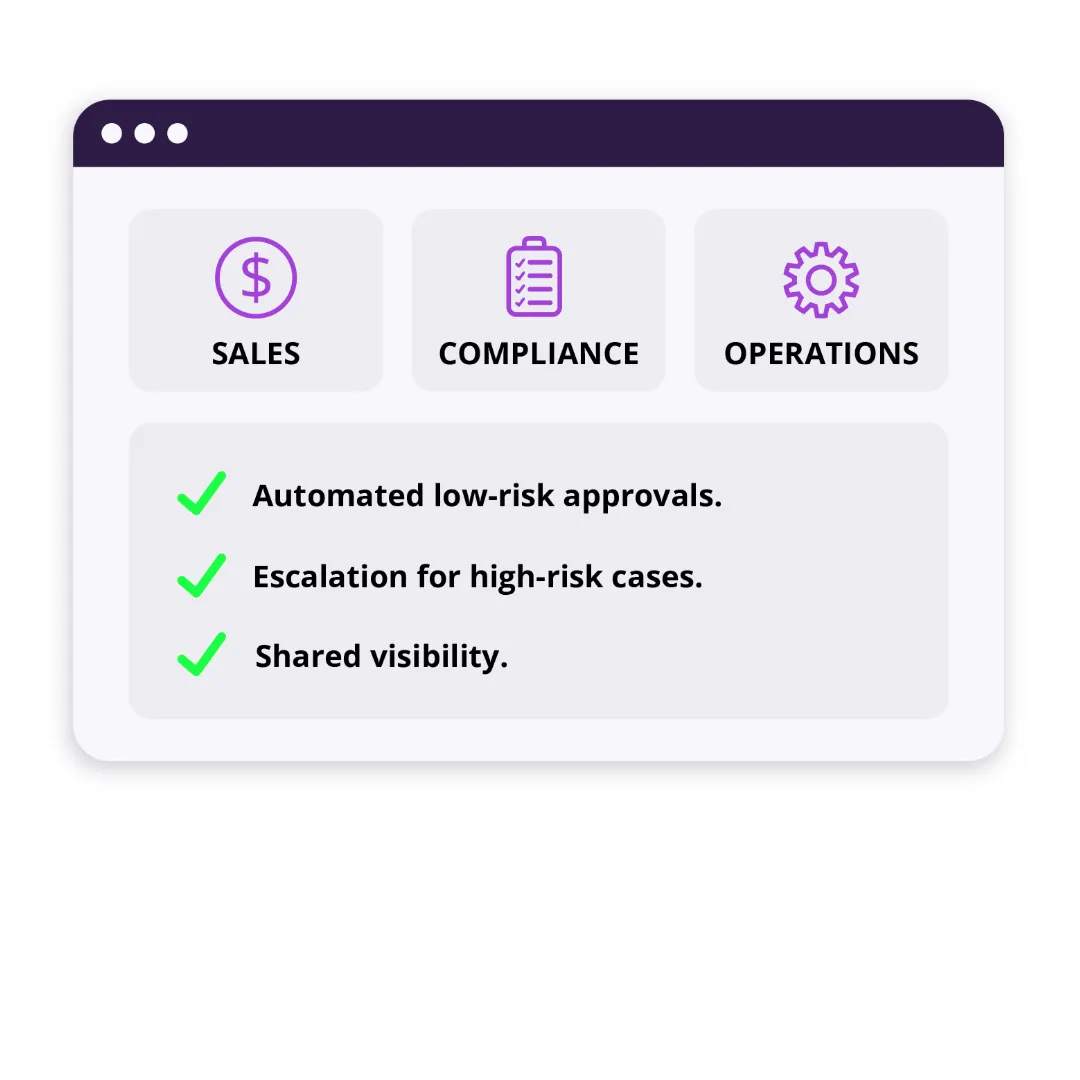

In-house KYC gives businesses greater control over customer verification, compliance processes, and data management, but requires investment in technology, personnel, and ongoing operations. Outsourced KYC provides access to specialist expertise, automation, and scalable verification capabilities, although businesses must consider provider oversight, ongoing costs, and data security risks. The right approach depends on a business's risk profile, growth plans, operational resources, and regulatory obligations.
When it comes to keeping your business secure and compliant, the importance of Know Your Customer (KYC) procedures can’t be overstated. These processes are designed to protect against fraud, money laundering, and the financing of terrorism, all while ensuring you meet regulatory standards. But as crucial as KYC is, many businesses—particularly those in financial services, crypto, and iGaming—are left wondering whether they should handle KYC in-house or outsource it to a third-party provider.
The decision isn’t an easy one. There are a lot of factors to weigh: the size of your business, the complexity of your regulatory environment, your plans for international growth, and, of course, the risks around fraud. In this article, we’ll take a closer look at the advantages and drawbacks of both approaches, exploring how each affects compliance, security, costs, and the ability to scale.
Key Takeaways
- Choosing between outsourced and in-house KYC requires balancing compliance requirements, operational control, scalability, cost, and risk management.
- In-house KYC provides greater control, customization, and direct oversight of customer verification processes but requires significant investment in technology, expertise, and ongoing compliance management.
- Outsourced KYC gives businesses access to specialist expertise, automation, and scalable compliance capabilities that can accelerate onboarding and reduce operational overhead.
- Outsourcing KYC does not automatically transfer regulatory accountability to the provider. Businesses must maintain appropriate oversight of outsourced verification activities and ensure their arrangements meet applicable requirements.
- The most effective KYC strategy is the one that supports regulatory compliance, protects against financial crime, and aligns with the organization's long-term growth objectives.
What is KYC?
KYC (Know Your Customer) is the process of verifying customer identities and assessing potential risk when establishing and maintaining a business relationship. It helps organizations manage financial crime risks and meet applicable compliance requirements. KYC typically involves confirming a customer's identity through reliable information or documentation, assessing relevant sanctions and politically exposed person (PEP) risks, and updating customer information when necessary.
Why is KYC necessary?
While industries like banking, cryptocurrency, and insurance are legally bound to verify customer identities, even businesses outside these sectors should be on top of their KYC game. Why? To protect against fraudsters, money launderers, and anyone with less-than-reputable intentions.
- Minimizing Criminal Activity: KYC helps organizations identify and prevent financial crime, including money laundering, terrorist financing, fraud, and identity theft. By verifying identities and keeping an eye on transactions, businesses can quickly spot any red flags, making it far harder for criminals to slip through the cracks.
- Adhering to Regulations: Many sectors, especially finance, are legally required to carry out KYC checks in line with Anti-Money Laundering (AML) regulations. Ignoring these requirements isn’t just risky; it can lead to heavy fines, legal headaches, and a damaged reputation.
- Avoiding Financial Losses and Reputational Damage: On top of legal risks, not conducting KYC can expose your business to financial losses and long-term reputational harm. Allowing fraudulent customers to slip in can result in scams, identity theft, and a massive loss of customer trust.
KYC outsourcing vs. in-house: Key differences
When it comes to managing Know Your Customer (KYC) processes, businesses typically face two choices: managing the process internally or outsourcing it to a third-party provider. Each approach offers distinct advantages and challenges. The right choice depends on an organization's compliance requirements, resources, growth plans, and risk profile. Let’s dive into the key differences between these two approaches and explore which might be the right fit:
In-house KYC
Managing KYC in-house means taking full responsibility for every step of the customer verification process, from gathering documents to assessing risks. While this offers complete control, it can also be resource-intensive and complex.
Benefits of in-house KYC
- Complete Control Over the Process: One of the primary advantages of in-house KYC is direct control over customer verification, compliance workflows, and operational processes. Companies can tailor their verification systems to fit their unique needs, adjusting them as required to meet specific market or industry demands. This flexibility is especially beneficial for businesses in niche sectors or those navigating complex regulatory environments.
- Flexibility and Customization: When businesses handle KYC internally, they have the ability to customize every aspect of the verification flow. From the methods used to assess customers, to the overall customer experience, everything can be fine-tuned to align with the company’s objectives and values.
- Enhanced Security: Managing KYC in-house can give businesses more direct oversight of customer data, access controls, and security policies. However, data security depends on the effectiveness of these controls, not simply whether verification is managed internally or outsourced.
Drawbacks of in-house KYC
- High Costs: Managing KYC internally demands a substantial financial commitment. Businesses must recruit and train compliance specialists, invest in robust technology infrastructure, and continually update their processes to stay aligned with evolving regulations. These expenses can be particularly burdensome for smaller companies and startups, making in-house KYC an impractical choice for many.
- Complexity: Building and maintaining an internal KYC function is no small feat. Organizations must establish clear policies and procedures, integrate sophisticated technology, and ensure their teams remain well-versed in regulatory changes and security risks. Keeping pace with an ever-shifting compliance landscape requires ongoing effort, expertise, and resources.
- Scalability Challenges: As a business expands, scaling an in-house KYC operation can become increasingly difficult. Without additional investment in personnel and technology, teams may struggle to manage higher customer volumes or adapt to new regulatory environments. This can lead to inefficiencies, delays, and potential compliance risks, ultimately hindering growth.
Outsourced KYC
Outsourcing KYC means engaging a specialist third-party provider to perform customer verification and related compliance tasks on behalf of a business. While outsourcing can reduce the strain on internal resources, businesses retain oversight of outsourced verification activities and remain responsible for meeting their applicable regulatory obligations.
The benefits of outsourced KYC
- Expertise: Specialist KYC providers can offer expertise in regulatory requirements, identity verification technologies, and compliance best practices. This can help businesses maintain effective KYC processes while reducing the need to develop every capability internally. However, organizations must still assess provider suitability and maintain appropriate oversight.
- Cost Efficiency: Outsourcing KYC can reduce upfront technology and staffing costs by giving businesses access to an established verification infrastructure. However, overall savings depend on verification volumes, provider pricing, integration requirements, and the level of manual review needed.
- Speed and Efficiency: Third-party KYC providers may use AI, machine learning, and automated verification workflows to reduce manual processing and accelerate customer onboarding. The effectiveness of these technologies depends on the provider's capabilities, integration quality, and how exceptions requiring human review are handled.
- Scalability: As businesses grow and enter new markets, outsourced KYC solutions provide the flexibility to accommodate varying regulatory requirements and diverse customer bases—without the need to scale up internal compliance teams.
Outsourcing KYC can help businesses improve operational efficiency and focus more resources on growth and customer experience. However, compliance outcomes depend on effective provider selection, appropriate oversight, and the quality of verification processes.
Drawbacks of outsourced KYC
- Trust Issues: A key challenge with outsourcing KYC is trust. Businesses must share sensitive customer data with third-party providers, which introduces risk if the provider lacks robust security measures. A data breach at their end could have serious repercussions for both the company and its customers.
- Limited Control: Outsourcing KYC means handing over a degree of control in the verification process. If the provider’s approach doesn’t align with the company’s standards or fails to meet specific regulatory requirements in different regions, this can lead to compliance risks and operational inefficiencies.
- Vendor Lock-in: Relying on a single provider for KYC can create vendor lock-in, limiting flexibility. If the service quality drops or the provider struggles to keep pace with evolving regulations, businesses may find themselves stuck with a subpar solution, making it costly and complex to switch providers.
How to choose between in-house and outsourced KYC
The decision between in-house and outsourced KYC isn’t always straightforward. Several key factors must be considered to determine the most suitable approach for a business:
- Business Size: Smaller and mid-sized companies often benefit from outsourcing KYC, as it grants access to sophisticated compliance solutions without hefty upfront investment. Larger organizations with more complex requirements may prefer an in-house approach, offering greater control and tailored processes.
- Regulatory Obligations: The decision to outsource KYC or manage it in-house should account for the regulatory requirements of each market where a business operates. Both approaches can support compliance, but businesses must consider their responsibilities, the level of control required, and whether external providers can meet their specific verification and reporting requirements.
- International Expansion: For companies entering new markets, outsourcing KYC can provide access to verification capabilities and regional expertise without building every process internally. However, businesses should assess whether a provider supports the countries, identity documents, customer types, and compliance requirements relevant to their operations.
- Risk Exposure: Businesses with higher exposure to financial crime, fraud, or money laundering require KYC processes that can effectively identify, assess, and manage risk.
Ultimately, the right choice depends on a company’s unique needs, risk profile, and long-term strategy.
Compliance and risks in KYC outsourcing
Both in-house and outsourced KYC solutions come with compliance risks. It is vital that businesses recognize these risks and take proactive steps to mitigate them.
Risks in outsourcing KYC
Outsourcing KYC can enhance efficiency and bring in specialist expertise, but it is not without its challenges. Key risks include:
- Regulatory Non-compliance: If a third-party provider fails to perform outsourced KYC activities in line with applicable requirements, the business may remain accountable for resulting compliance failures. Organizations should assess provider suitability, establish clear responsibilities, monitor performance, and maintain appropriate oversight of outsourced activities.
- Data Breaches: Sharing sensitive customer data with an external provider increases the risk of security breaches. Businesses must verify that their outsourcing partners comply with data protection laws, such as the GDPR, and implement stringent cybersecurity measures.
Taking a strategic and informed approach to outsourcing KYC can help businesses navigate these risks while benefiting from the efficiencies it offers.
Data protection and compliance in outsourcing
Outsourcing KYC processes brings efficiency, but data protection and regulatory compliance must remain a top priority. To mitigate the risks associated with third-party providers:
- Verify Compliance: Assess whether the outsourced KYC provider meets applicable data protection requirements, including GDPR where relevant. Review how customer information is collected, processed, stored, shared, and protected, alongside the provider's security controls and relevant certifications.
- Conduct Regular Audits: Routine audits help confirm that providers maintain the highest standards of data security and compliance, giving you confidence in their processes.
- Prioritise Security Protocols: Your provider must implement strong encryption, secure data storage, and robust access controls to safeguard customer data from breaches or unauthorized access.
By taking these steps, businesses can maintain compliance, protect sensitive data, and ensure trust remains at the core of their operations.
Cost and financial considerations
Choosing the right KYC operating model is not only a compliance decision but also a financial one. While outsourcing often delivers immediate cost savings through automation and efficiency, businesses must also consider the long-term financial impact.
- In-house Costs: Managing KYC internally can be costly, requiring investment in skilled personnel, robust technology infrastructure, and ongoing training. Beyond the initial setup, businesses must account for the long-term expenses of maintaining the system, such as software updates, acquiring new technology, and managing increasing verification demands.
- Outsourced Costs: Outsourcing KYC can offer substantial short-term savings, but businesses must factor in ongoing service fees, customization costs, and potential hidden charges. Over time, these expenses can accumulate, so it’s essential to conduct a thorough cost-benefit analysis to ensure outsourcing remains the most cost-effective option.
Conclusion
Outsourcing KYC can reduce upfront investment and provide access to specialist expertise and scalable verification capabilities. However, businesses must consider ongoing service fees, data security risks, provider oversight, and potential limitations in flexibility. Conversely, managing KYC in-house provides greater control and customization but requires continued investment in technology, skilled personnel, and compliance management.
The right choice ultimately depends on a business's regulatory obligations, risk exposure, operational resources, and long-term growth plans. Neither approach guarantees better compliance or lower costs. Businesses should evaluate the total cost, level of control, and operational risks associated with each model before making a decision.
As regulatory requirements continue to evolve, businesses need KYC processes that balance compliance, operational efficiency, and customer experience. Regardless of the operating model, effective customer verification, appropriate oversight, and ongoing risk management remain essential.
OnBoard by MVSI is an end-to-end merchant onboarding and compliance platform for regulated payments, fintech, and financial services, combining digital onboarding, KYB, AML screening, underwriting, and ongoing due diligence (OCDD) in one system.
By centralizing onboarding, compliance, and risk workflows, organizations can improve operational efficiency while maintaining strong customer verification and compliance standards.
Disclaimer: This article is provided for informational purposes only and does not constitute legal, regulatory, compliance, or risk management advice. Regulatory obligations vary by jurisdiction, industry, and business model. Organizations should consult qualified legal, compliance, and risk professionals when designing, implementing, or outsourcing KYC programs.
Frequently Asked Questions
What are the main risks of outsourcing KYC?
The main risks of outsourcing KYC include data security concerns, reduced control over verification processes, third-party dependency, and potential compliance failures. Businesses should assess provider security, regulatory capabilities, service performance, and contractual responsibilities before outsourcing KYC activities. Appropriate oversight remains important throughout the relationship.
Is it better to outsource KYC or manage it in-house?
The choice between outsourced and in-house KYC depends on an organization's compliance requirements, resources, growth plans, and risk profile. Outsourced KYC can provide scalability, specialist expertise, and operational efficiency, while in-house KYC offers greater control, customization, and direct oversight of compliance processes. Neither approach is universally better. Businesses should evaluate the costs, risks, and level of oversight required before choosing an operating model.
What is KYC outsourcing?
KYC outsourcing is the practice of using a third-party provider to perform customer identity verification and compliance checks on behalf of a business rather than managing those processes internally. This can help organizations improve operational efficiency, access specialist compliance expertise, and reduce the resources required to manage KYC processes.
How much does KYC cost?
The cost of KYC depends on whether a business manages the process internally or outsources it to a third-party provider. Outsourced KYC may reduce upfront investment but involves ongoing provider fees, integration costs, and potentially usage-based charges. In-house KYC generally requires greater investment in personnel, technology, training, and regulatory compliance management. The most cost-effective approach depends on verification volumes, operational complexity, and long-term requirements.

