


Automated PEP & Sanctions Screening for Financial Services
Catch PEP and sanctions risks
Automate Politically Exposed Person (PEP) screening, sanctions checks, adverse media monitoring, and AML screening against 200+ global watchlists in real time. Catch politically exposed persons and sanctioned entities before they become compliance failures.
.webp)


Your Trusted Partner in Security & Compliance
MVSI prioritizes customer security as the cornerstone of its mission, safeguarding sensitive data
with unwavering dedication and cutting-edge technology.


What is PEP screening and why does it matter for AML compliance?
Politically Exposed Person (PEP) screening is the process of checking customers, beneficial owners, directors, and related parties against databases of politically exposed persons to identify elevated corruption and financial crime risk.
A politically exposed person is someone who holds, or has held, a prominent public role, and may present elevated bribery or corruption risk because of their position, influence, or access. Depending on the jurisdiction, PEP screening may also extend to close associates and family members, and higher-risk matches may require enhanced due diligence.
Sanctions screening is the related process of checking whether a person or entity appears on official sanctions lists that restrict financial dealings or other activity.
Under AML/CTF frameworks, these checks are a core control for payment providers, merchant acquirers, banks, lenders, and fintechs. This includes obligations shaped by the AML/CTF Act and AUSTRAC guidance in Australia, the Bank Secrecy Act in the United States, and the Money Laundering Regulations 2017 in the UK.
PEP screening with sanctions, watchlist,
and adverse media coverage
OnBoard brings together PEP screening, sanctions screening, watchlist screening, adverse media screening, and AML workflow automation in one connected compliance system, with coverage designed for regulated financial services teams operating across multiple jurisdictions.
OnBoard supports screening through trusted global data sources and configurable workflows designed for regulated financial services teams.

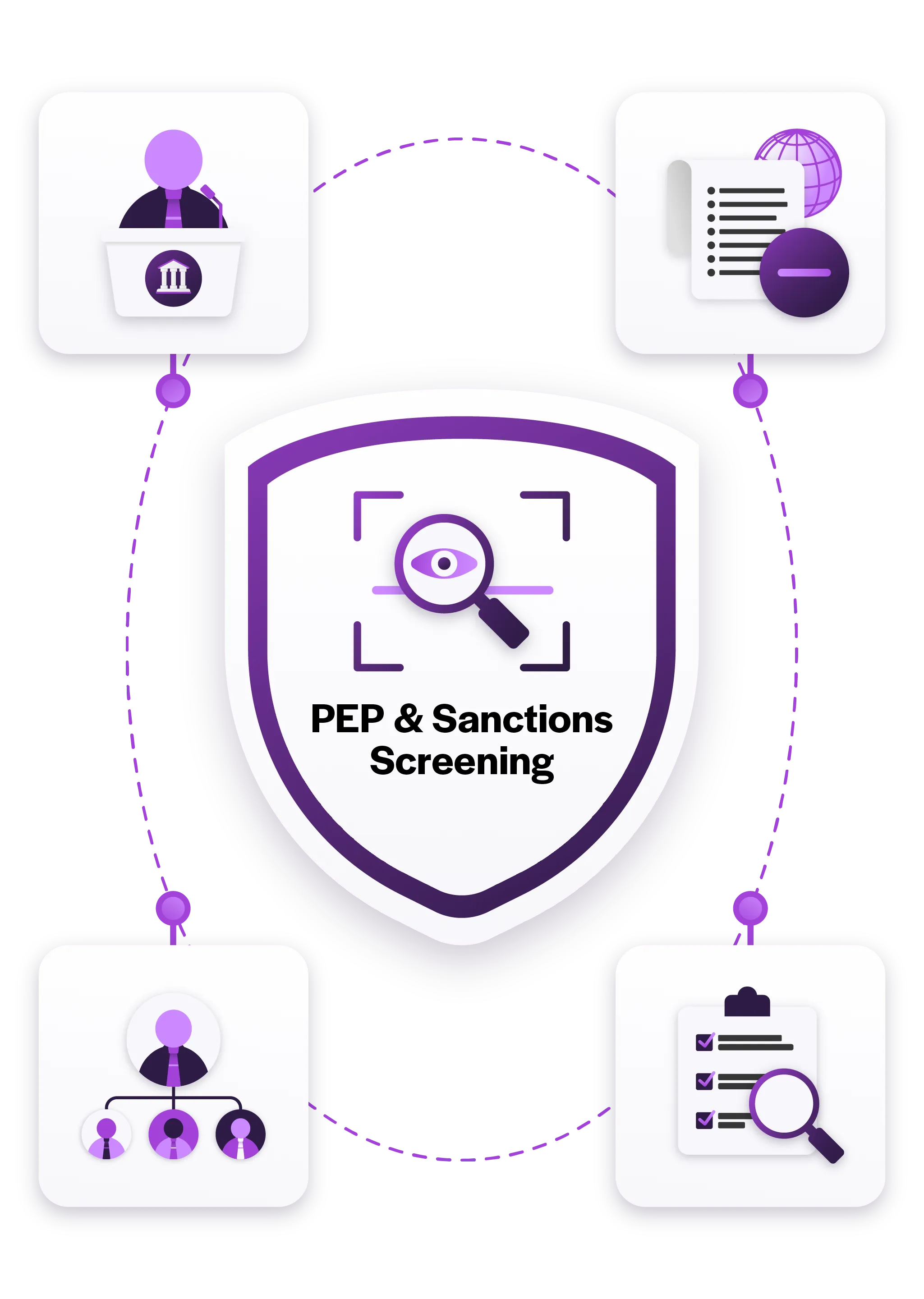
Politically Exposed Persons
Screen domestic and foreign PEPs across customers, directors, beneficial owners, and connected family members or close associates.

Global sanctions lists
Screen against OFAC, the UN, the EU, HM Treasury, AUSTRAC, and 200+ global watchlists.

Adverse media screening
Monitor negative news and reputational risk signals across 50+ languages.

Watchlists and additional
risk lists
Screen against external watchlists, internal risk lists, and other special-interest data sources where enhanced risk visibility is required.

Ongoing monitoring
Run checks at onboarding and on an ongoing basis, including rescreening for sanctions, PEP, and adverse media changes after go-live.

Configurable matching
Apply precise, near, and broad match settings to balance sensitivity, speed, and review effort.
How PEP and sanctions screening works in
OnBoard by MVSI
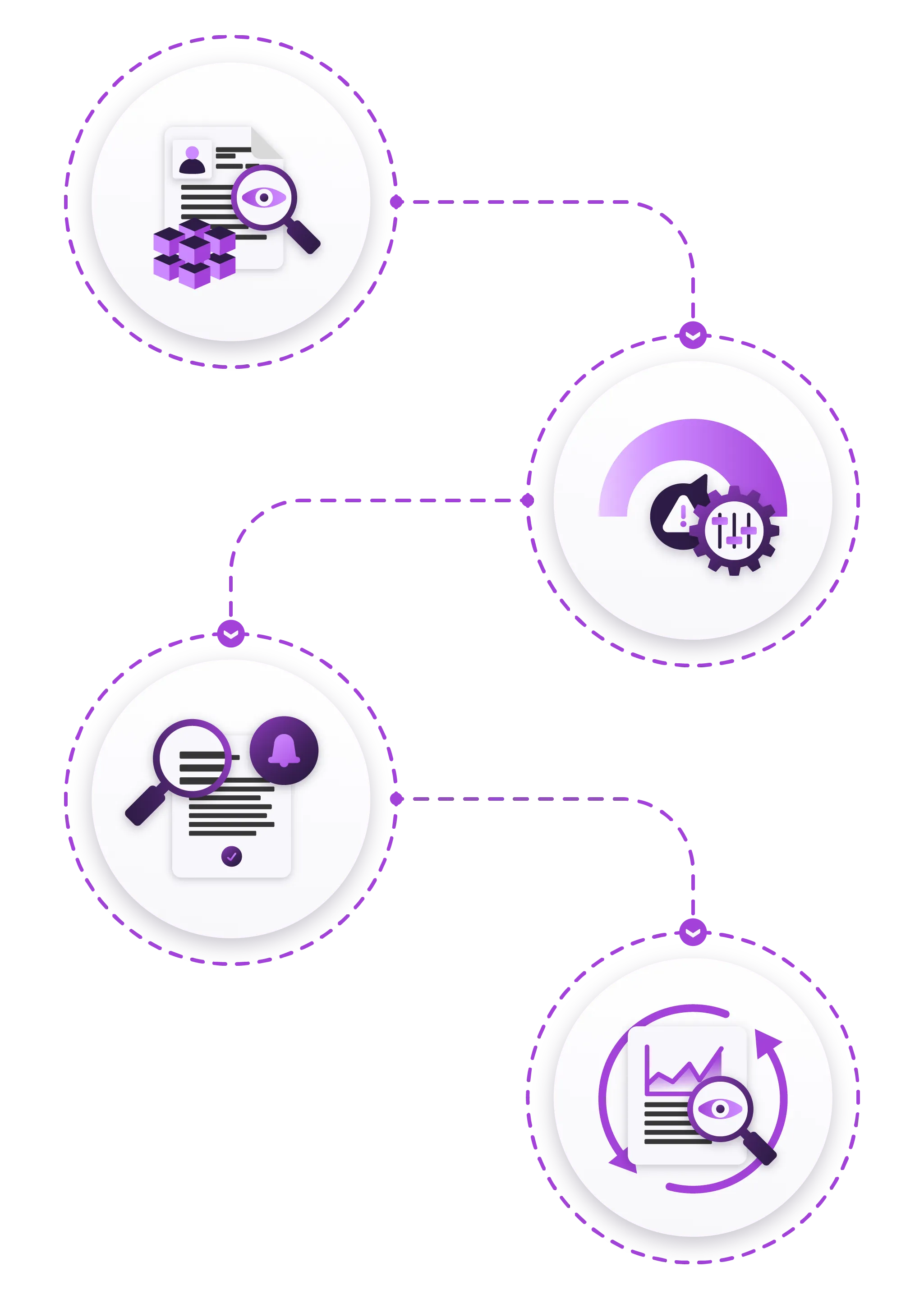
Step 1: Screen customer and entity data
Customer and entity data is submitted to OnBoard’s orchestration engine and checked against global watchlists in real time.
Step 2: Score matches by risk and rules
Each result is assessed using configurable rules, match thresholds, and jurisdiction-specific logic aligned to your risk appetite.
Step 3: Alert compliance teams with evidence
Compliance teams receive an instant alert with the match source, supporting detail, and a full audit trail for review and action.
Step 4: Monitor customers after onboarding
Ongoing Customer Due Diligence (OCDD) continues screening after onboarding, so changes in PEP status, sanctions exposure, or adverse media are flagged as they happen.
Learn more about our automated KYB solutions and see how we simplify compliance for your business.
Risk-based PEP screening, not simple name matching
Contextual matching reduces irrelevant alerts
PEP checks and sanctions checks should never rely on name alone. OnBoard helps firms take a risk-based approach by combining name matching with contextual data such as date of birth, residency, citizenship, geography, entity information, and linked onboarding records where available. This helps reduce irrelevant alerts, improve match quality, and support more defensible, audit-ready compliance decisions.
For teams comparing watchlist screening tools or politically exposed persons software, that difference matters. Screening becomes operational when it connects directly to onboarding, escalation, enhanced due diligence, and ongoing monitoring.

Key capabilities of OnBoard’s sanctions screening software
Enterprise-grade sanctions and AML screening inside a complete onboarding workflow
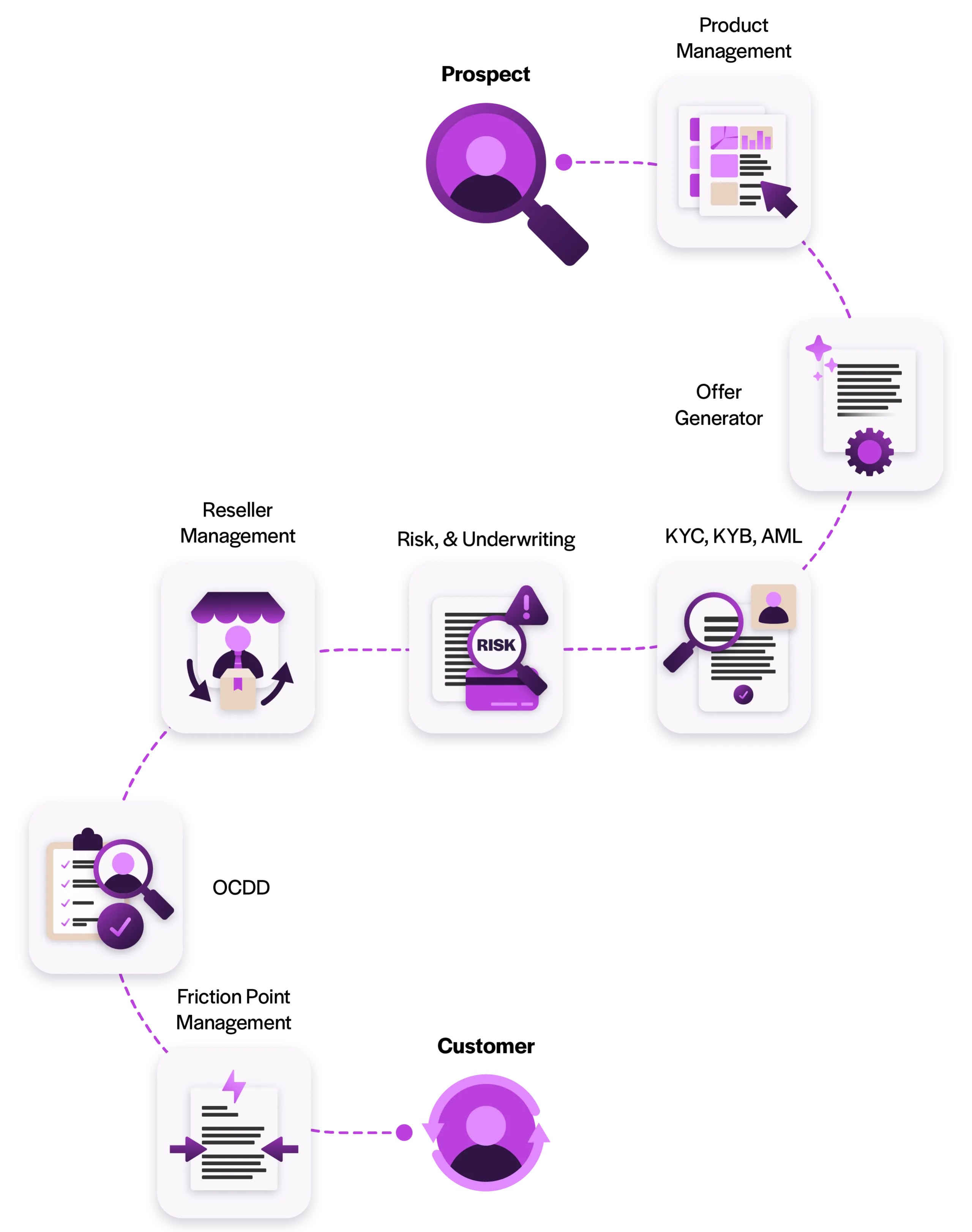
OnBoard connects sanctions screening, PEP screening, and AML screening to action. That means alerts do not sit in a standalone tool waiting for manual follow-up. Screening results flow directly into onboarding, KYB, AML, underwriting, and ongoing customer due diligence workflows.
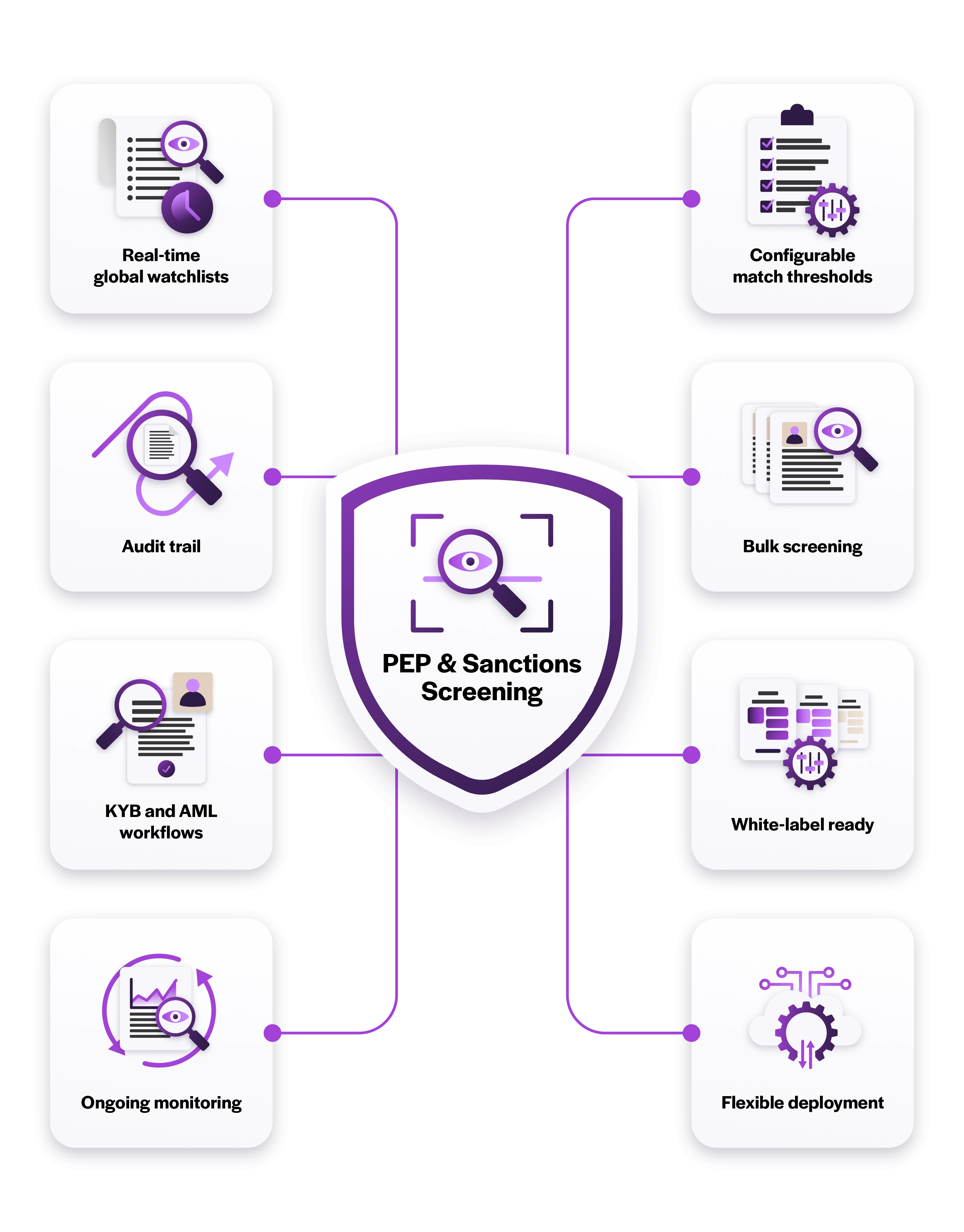
Real-time API connections to 200+ global watchlists
Run screening checks the moment customer data is submitted.
Configurable match thresholds
Use precise, near, and broad match settings to reduce irrelevant matches and control review effort.
Full audit trail
Maintain a complete record of searches, results, decisions, escalations, and user activity for regulatory reporting.
Bulk screening for existing portfolios
Run portfolio-wide remediation, periodic reviews, and back-book screening at scale.
Integrated with KYB and AML workflows
Connect screening with business verification, identity checks, document collection, risk scoring, and decisioning in one system.
White-label ready
Deploy branded onboarding and compliance experiences across business units, channels, and partners.
Ongoing adverse media and watchlist monitoring
Identify risk changes after onboarding, not just at the point of entry.
Flexible deployment
Use OnBoard as a full end-to-end workflow or integrate screening into existing infrastructure through APIs and orchestration.
Who needs PEP and sanctions
screening software?
OnBoard is designed for regulated financial services teams and payment providers that need to move quickly without weakening controls.

Merchant acquirers
Screen large merchant portfolios faster, with less manual review and stronger audit readiness.

Payment facilitators (PayFacs)
Automate PEP screening and sanctions checks across sub-merchants and partner-led channels.

Banks and regulated lenders
Support customer onboarding and ongoing CDD obligations with consistent, rules-driven screening.

Cross-border payment providers
Apply screening and monitoring across multiple jurisdictions, entities, and regulatory environments.

AML On Demand for complex cases, volume spikes, and OCDD workloads
OnBoard by MVSI is an end-to-end merchant onboarding and compliance platform for regulated payments, fintech, and financial services, combining digital onboarding, KYB, KYC, AML, underwriting, and ongoing customer due diligence (OCDD) in one system.
AML On Demand extends that platform with expert operational support when volumes spike, entity structures become more complex, or ongoing due diligence workloads increase. For payment providers, this means access to specialist verification support that helps keep onboarding moving, reduce pressure on internal teams, and maintain consistency with AML/CTF obligations.
Support high-volume onboarding without adding fixed headcount
Handle spikes in applications and reviews without slowing approvals or overstretching internal compliance teams.
Get expert help on complex cases
Escalate higher-complexity entities, ownership structures, and exceptions to experienced verification specialists when additional scrutiny is needed.
Keep OCDD and remediation work moving
Add operational capacity for ongoing customer due diligence, back-book reviews, and remediation programs without disrupting day-to-day onboarding.
Maintain a consistent customer experience
Extend internal operations with a specialist team that supports fast communication, cleaner case handling, and a more consistent compliance process.
Scale globally with multilingual support
Support customers across jurisdictions with multilingual verification capability that helps reduce delays and keeps cases progressing. This reflects the current AML On Demand positioning around a global expert team and multilingual support.
World-class software available world-wide
OnBoard is available in 120+ countries and 20+ languages.

Why financial services teams choose OnBoard for
PEP screening
OnBoard helps regulated financial services teams reduce manual review, improve audit readiness, and manage ongoing due diligence in one connected workflow.
Most companies do not need another isolated screening tool. They need screening that supports better decisions across the customer lifecycle.
OnBoard gives compliance teams the controls to identify sanctioned entities, higher-risk PEP relationships, and adverse media exposure early, with stronger visibility, clearer evidence, and full audit trails. It gives sales and operations teams a faster, cleaner path from application to approval. And it gives the business a stronger way to manage AML risk without creating unnecessary friction for legitimate customers.
This is what effective AML screening should deliver: better coverage, clearer evidence, lower manual effort, and faster action when risk appears.
Frequently asked questions about
PEP screening and sanctions screening
What is the difference between PEP screening and sanctions screening?
PEP screening identifies individuals who hold, or have held, prominent public positions, along with close associates and family members who may present elevated corruption risk. Sanctions screening checks whether a person or entity appears on official sanctions lists that restrict dealings. A person can be a PEP without being sanctioned, but both require appropriate review under AML controls.
Do PEP checks apply to family members, close associates, directors, and beneficial owners?
PEP screening often extends beyond the named customer. Depending on the jurisdiction, firms may also screen directors, beneficial owners, close associates, and family members where they are relevant to the customer relationship and risk profile. This helps regulated businesses identify higher-risk relationships earlier and apply appropriate due diligence.
How often should PEP and sanctions checks be run?
Checks should be run at onboarding, before key account or ownership changes, and on an ongoing basis after approval. This matters because sanctions status, PEP status, and adverse media exposure can change over time. Many firms also rescreen customers, directors, and beneficial owners as part of ongoing due diligence and remediation activity.
Does OnBoard screen against OFAC, the UN consolidated list, and AUSTRAC?
Yes. OnBoard supports screening against major global sanctions sources including OFAC, the UN consolidated list, the EU, HM Treasury, AUSTRAC, and 200+ global watchlists. It also supports PEP screening, adverse media screening, and broader watchlist screening as part of a unified AML workflow.
What happens when a match is found?
OnBoard generates an alert with the match source, supporting details, and a full audit record. Compliance teams can review the result, request enhanced due diligence, escalate the case, pause onboarding, approve with conditions, or reject the application according to internal policy. A PEP match does not automatically mean rejection, but it may require additional review based on jurisdiction and risk.
Does a PEP match mean the customer must be rejected?
No. A PEP match does not automatically mean rejection. PEP screening supports risk-based decisioning, so higher-risk matches may require enhanced due diligence, additional approvals, or ongoing monitoring depending on the jurisdiction, customer profile, and internal policy.
Can PEP screening be integrated into our existing onboarding workflow?
Yes. OnBoard can be used as a full onboarding and compliance platform or integrated into an existing workflow through APIs and orchestration. That allows PEP screening, sanctions checks, and adverse media monitoring to sit alongside KYB, identity verification, document capture, underwriting, and ongoing due diligence.
What is adverse media screening and why does it matter for AML compliance?
Adverse media screening checks credible news and risk sources for reports linked to fraud, corruption, sanctions breaches, money laundering, terrorism, and other forms of financial crime. It adds context that official watchlists may not capture immediately and helps regulated firms identify reputational and compliance risk earlier in the customer lifecycle.
Is pricing available for PEP and sanctions screening in OnBoard
Yes. Pricing is available on request. PEP and sanctions screening is delivered as part of the wider OnBoard platform, which brings together digital onboarding, KYB, AML, underwriting, and ongoing due diligence in one system. Contact the OnBoard team to discuss your requirements.
What should financial services teams look for in PEP screening software?
PEP screening software should support accurate matching, global watchlist coverage, ongoing monitoring, configurable rules, audit trails, and integration with wider AML and onboarding workflows. For regulated financial services teams, the strongest solutions help reduce manual review while supporting risk-based decisioning across the customer lifecycle.
Stop PEP and sanctions risks before they enter your portfolio
OnBoard automates screening across your entire customer lifecycle, from onboarding to ongoing monitoring. Reduce manual review, strengthen AML controls, and move faster with more confidence.
