


.webp)

Why do so many merchants still abandon onboarding applications, even though every vendor claims to offer "rapid, automated onboarding"? For acquirers and payment service providers (PSPs), the frustration is real: lost revenue, wasted sales effort, and teams bogged down by manual work. The vendor landscape is overcrowded and confusing, with nearly every provider promising “end-to-end” onboarding. But most only solve a fragment of the journey.
A company specializing in identity verification, for instance, might present itself as an all-in-one onboarding solution when, in reality, identity checks represent just a fraction of the work required to get a merchant live and trading. Your internal teams are left cobbling together point solutions, spending hours on manual reviews, reconciling siloed data, and every unnecessary step increases the risk of losing merchants to frustration or competitors.
For acquirers and PSPs, the question is not whether a platform can complete individual checks quickly. It is whether it can connect the full merchant lifecycle.
An end-to-end merchant onboarding platform should connect digital application intake, KYB, KYC, AML screening, risk and underwriting, approvals, activation and ongoing customer due diligence within one governed workflow.
This checklist is designed for vendor evaluation. It shows what to test, what to ask in a demo and where to look for gaps before committing to a platform.
Key Takeaways
- Evaluate the whole merchant lifecycle, not just verification. A platform should connect application intake through risk, underwriting, approval, activation and ongoing due diligence.
- Verification results should inform the decision. KYB, KYC and AML checks should feed directly into risk scoring, underwriting and approval workflows rather than sit in separate systems.
- Management by exception should reduce manual work without removing control. Straightforward cases can move automatically while exceptions are routed for review.
- Configurability and integration determine whether the platform can scale. Workflows need to adapt across products, markets, brands and risk profiles without creating new silos.
- Auditability and lifecycle monitoring matter beyond go-live. Teams should be able to explain onboarding decisions and keep merchant risk information current after activation.
The Hidden Cost of a Fragmented Merchant Onboarding Process
Many acquiring teams operate with what looks like a sophisticated tech stack. There’s an identity verification solution, a separate prospect management tool, another for document collection, and a workflow system for approvals. On paper, it seems comprehensive. In reality, these tools rarely speak the same language. The result is operational blind spots, rekeyed data, and more room for error.
Consider a typical merchant onboarding journey. A merchant fills in your online application, is redirected to a third-party identity verification provider with different branding, then returns to your platform to re-enter the same details. They upload documents through another portal and move on to a separate compliance screening tool.
At each handoff, you lose merchants. Your team wastes time transferring data and chasing missing information. Compliance and audit processes become a nightmare of reconciling spreadsheets and email chains. Every gap is a lost opportunity, higher cost, and an increased risk of non-compliance.
Choose the wrong platform, and you're not just creating more work. You're increasing the risk of merchant drop-off, operational bottlenecks, compliance failures and serious audit issues as you scale.
What to Look for in a Digital Onboarding Solution
It’s easy to be dazzled by marketing promises, but the features that truly matter are those that directly reduce merchant friction and empower your team to scale without proportional increases in headcount. Here’s what sets a real end-to-end onboarding platform apart.
Use the sections below as a vendor-demo checklist. Ask vendors to show each capability working in the onboarding journey, rather than simply confirming that the feature exists.
1. Automation and Management by Exception
Look for platforms that offer genuine, end-to-end automation, not just digital versions of manual processes. The gold standard is management by exception: routine applications can move automatically through configured rules, while genuine anomalies, incomplete information or higher-risk cases are routed for human review. This cuts manual workload and speeds merchant activation without removing human oversight.
Equally important is the ability to bring applicant data, internal systems, external sources and product requirements into the same workflow. This gives verification, risk and underwriting teams a consistent data set to work from and reduces manual rekeying between stages.
What to look for:
- Can the platform automate the journey from application through approval and activation, with clear exception routing when human review is needed?
- Can applicant, internal, external and product data be used within the same workflow?
- What parts of the process still require a manual handoff outside the platform?
2. Real-Time Data and Risk Analysis
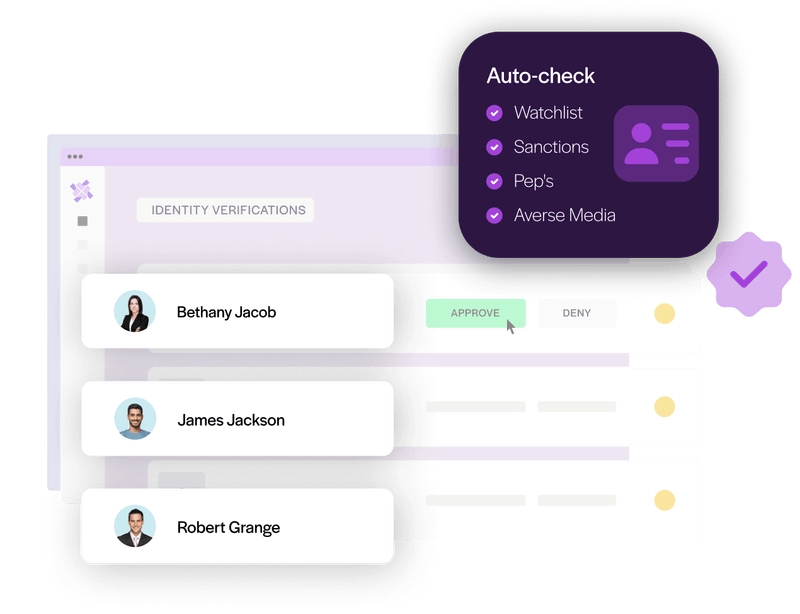
A modern onboarding platform should connect to multiple data sources in real time, rather than relying on slow batch uploads or manual data transfers. That can include applicant information, business registry data, identity and beneficial ownership checks, sanctions and PEP screening, credit or commercial data, and relevant internal data.
But collecting the data is only part of the job. KYB, KYC and AML results should feed into the risk and underwriting process so they can influence what happens next, whether an application can proceed, needs more information or should be escalated for review.
What to look for:
- Can the platform combine KYB, KYC, AML and external data into a single merchant risk profile?
- Can risk criteria, scoring and decision rules be configured to support automated routing and escalation?
- Can the vendor show how a verification result changes the downstream underwriting or approval path?
Verification is only one layer of the onboarding decision. Why Verification Isn't Enough explores the wider risk, underwriting and lifecycle context acquirers and PSPs should consider.
3. Dynamic Smart Forms
Traditional onboarding forms often take a one-size-fits-all approach, requiring every merchant to complete the same lengthy list of fields, regardless of their business type or risk profile. In contrast, leading digital onboarding solutions use dynamic smart forms that adapt in real-time to each applicant’s responses. These forms display only the questions and fields that are truly relevant, making the process much faster and less frustrating for merchants.
Advanced forms should do more than hide and show fields. They can validate information as it is entered, calculate relevant values, request supporting evidence when needed and pass structured data into downstream verification, risk and underwriting workflows. For example, instead of asking dozens of questions about transaction size and delivery schedules, a dynamic form can calculate prepayment exposure using just a few targeted inputs. The merchant gets a simpler experience even when the logic behind it is sophisticated.
What to look for:
- Do onboarding forms adapt in real time based on merchant responses?
- Can forms validate data, request supporting evidence and trigger additional steps based on responses?
- Does structured application data flow into downstream KYB, AML, risk and underwriting workflows without being manually rekeyed?
For a deeper look at what separates genuinely intelligent intake from basic conditional forms, see No-Touch Onboarding Starts at the First Question.

4. White-Label Customization
A seamless, on-brand onboarding journey reassures applicants and strengthens trust in your business from the very first interaction. Look for a platform that lets you brand forms, communications, progress indicators and portal experiences so merchants remain inside your experience rather than being pushed into a disconnected third-party journey.
For acquirers and PSPs working across partners, brands or regions, also consider how that control scales. Branding and permissions should be able to vary between journeys while core compliance, risk and approval controls remain centrally governed.
What to look for:
- Can the full merchant-facing journey be branded, including forms, communications and portal experiences?
- If you support partners or multiple brands, can branding and permissions vary while core compliance, risk and approval controls remain centrally governed?
5. Audit Readiness and Single Source of Truth
Compliance teams need more than just a digital paper trail. A strong onboarding platform should provide a single source of truth where the data, checks, rule outcomes, reviewer actions, approvals and timestamps behind each decision are retained in one consistent record.
When an auditor, regulator or internal reviewer asks why a merchant was approved, referred or escalated, your team should be able to reconstruct that decision without piecing together spreadsheets, inboxes and separate systems.
What to look for:
- Can you trace why an application was approved, referred or escalated, including the data and checks used?
- Are rule changes, reviewer actions and approval history time-stamped and retained?
- Can reporting and data exports support audits and internal reviews without manually rebuilding the file?
6. Workflow Management and Configurable Exception Handling
Effective onboarding platforms should let teams configure routing, approval and exception logic around their own risk appetite and operating model. Routine cases can move automatically where policy allows, while incomplete, contradictory or higher-risk applications are sent to the right specialists with the relevant context. That keeps experts focused on the cases that genuinely need human judgment rather than routine administration.
If the platform uses AI to interpret documents, validate information or trigger actions, ask how that automation is governed. Teams should be able to understand the rules, thresholds, fallback logic and review paths behind automated outcomes rather than relying on a black box.
What to look for:
- Can routine workflow, routing and exception rules be changed without developer involvement?
- Can each exception be routed to the right owner with the relevant context and decision history?
- If AI is used, are its actions traceable and can uncertain or higher-risk cases be routed to human review?
For a deeper evaluation of AI governance, see AI Merchant Onboarding: Why Controlled Automation Beats Black-Box AI.
7. Multi-Jurisdiction Compliance
Scaling globally means adapting to different regulatory and policy requirements without creating a separate onboarding stack for every market. Look for a platform that can vary data requirements, due diligence steps, AML/KYC workflows, risk rules and approval paths by jurisdiction, merchant type, product and risk profile, while keeping those processes centrally governed.
The right platform should give teams the flexibility to configure onboarding workflows around the requirements that apply in each market, while maintaining consistent governance, visibility and auditability across the wider operation. As regulations, internal policies or risk requirements change, those workflows should also be able to adapt without rebuilding the onboarding process from scratch.
What to look for:
- Can AML, KYC and other due diligence workflows vary by jurisdiction, product, merchant type and risk level?
- Can policies, rules and approval requirements be updated without rebuilding the entire workflow?
- Can teams maintain central governance and visibility while supporting different regional requirements?
8. Multi-Language Support
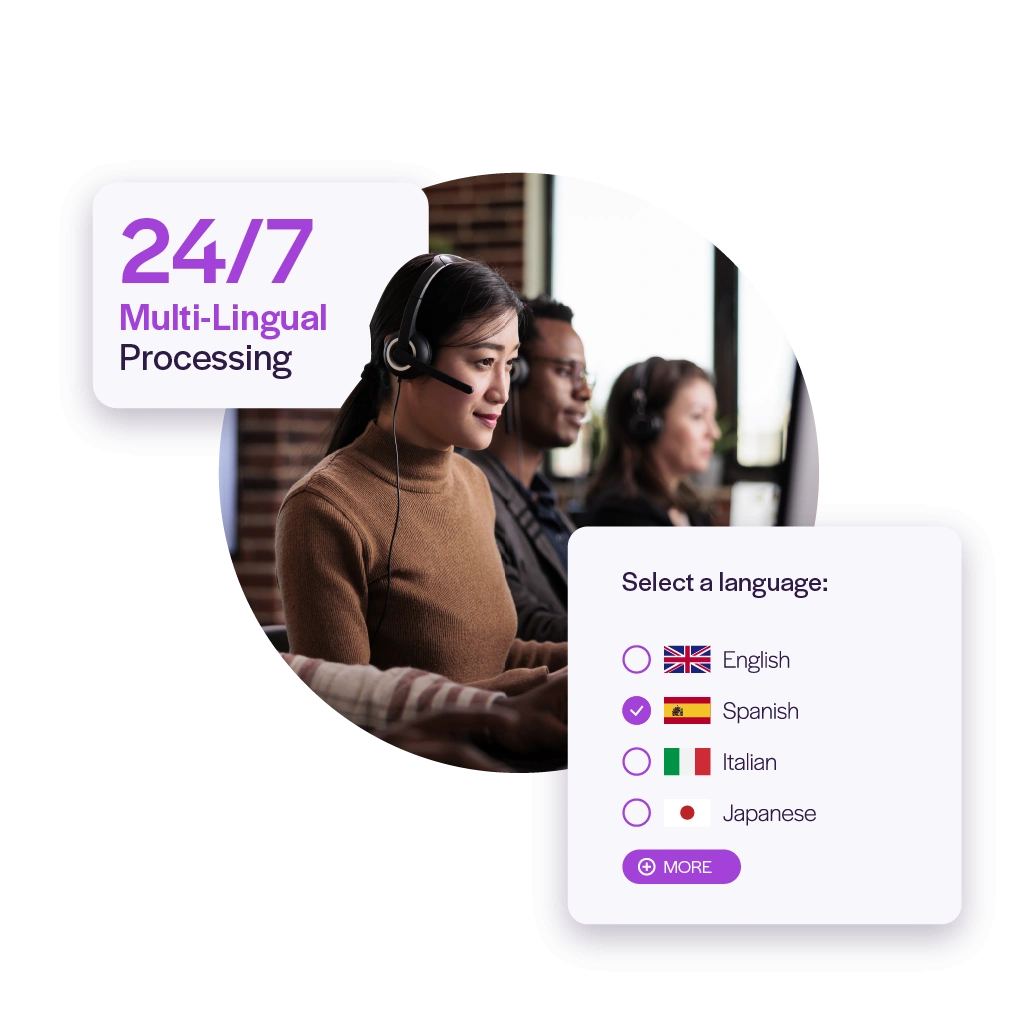
Global markets rarely operate in a single language. A robust digital onboarding platform should provide native multi-language support throughout the entire onboarding journey, enabling your business to serve merchants across the UK, Europe, North America, Asia, and beyond. Comprehensive language support allows every merchant to complete onboarding in their preferred language, not just with a translated homepage, but with a fully localized experience.
What to look for:
- Does localization cover forms, communications and customer-facing guidance rather than only interface translation?
- Can language and workflow configuration be managed across the markets in which you operate?
9. Seamless Integrations and Data Portability
A true digital onboarding platform has to work with the technology stack you already use. Evaluate the APIs, integration frameworks and data export options available for CRM, risk, verification, payments and other core systems, including whether data can move in both directions where required.
An API checkbox is not enough. The platform needs to exchange the data and trigger the events your operating model depends on without creating another manual handoff. Also consider how easily your data can be exported or transferred if your systems or vendors change, so today's integration decision doesn't become tomorrow's vendor lock-in.
What to look for:
- What APIs and integration frameworks are available for your existing systems?
- Can the platform send and receive data in real time where your workflow requires it?
- How can your data be exported or transferred if your systems or vendors change?
10. Global Operations and Smart Dashboards
For businesses operating across multiple countries, subsidiaries, brands or products, central visibility matters just as much as workflow automation. Smart dashboards should show where applications are sitting, which cases need attention, how long stages are taking and how outcomes vary across teams or markets.
That gives Sales, Compliance, Risk and Operations one shared view of the onboarding journey instead of forcing each team to maintain its own status tracking.
What to look for:
- Can you report on application stage, exception queues, cycle time, decision outcomes and team workload?
- Can reporting be filtered by market, product, partner, brand or risk profile?
- Can different teams access appropriate views while working from the same underlying merchant record?
11. Ongoing Due Diligence After Activation
Merchant risk does not stop when an application is approved. If ongoing customer due diligence (OCDD), re-verification or ongoing screening sit in a separate system, teams can lose the context built during onboarding.
When evaluating a platform, ask whether the same merchant record can support post-activation due diligence, risk updates and review workflows. This creates continuity between the decision to onboard a merchant and the controls used to keep that relationship current over time.
What to look for:
- Does the same merchant record continue into OCDD and re-verification workflows?
- Can the frequency and intensity of reviews be configured by risk profile or policy?
- Can new information or changes in risk automatically trigger a review or escalation?
Digital Onboarding Platform Evaluation Checklist
Use this matrix during vendor demos and procurement reviews. Ask vendors to demonstrate each capability in a live workflow rather than answering with a simple yes or no.
Red Flags When Evaluating an Onboarding Platform
A long feature list can still hide significant operational gaps. Ask more questions if:
- The vendor demo stops at verification and cannot show underwriting, approval, activation or post-onboarding workflows.
- Teams still need to rekey data or move documents between systems, emails or spreadsheets.
- Routine policy or workflow changes require custom development or vendor intervention.
- Automated or AI-assisted outcomes cannot be traced back to the data, rules and review path behind them.
- Exceptions are pushed into manual queues without clear ownership or context.
- “Global” capability means translation only, with little ability to configure workflows by jurisdiction, product or risk.
- The platform has no clear way to continue due diligence or risk monitoring after activation.
How OnBoard Maps to the Checklist
OnBoard by MVSI is an end-to-end merchant onboarding and compliance platform built for regulated payments, fintech and financial services. It connects smart digital applications, KYB, KYC, AML screening, risk and underwriting, configurable workflows, approvals and ongoing customer due diligence within one system.
But ticking the boxes on a feature checklist is only part of the story. The real test comes when merchant volumes grow, risk profiles vary, regulations change or an application needs input from multiple teams. That is where disconnected point solutions and manual handoffs start to show their weaknesses.
OnBoard is designed to bring those moving parts together, giving Sales, Compliance, Risk and Operations visibility across the same merchant journey while automating straightforward decisions and routing genuine exceptions to the right people.
And when additional compliance capacity or specialist support is needed, AML On Demand gives teams access to experienced verification specialists for complex cases, higher-risk merchants and spikes in onboarding volume.
For acquirers and PSPs, that can mean faster merchant activation, less manual intervention and greater control over how onboarding operates across teams, partners and markets.
See how OnBoard supports merchant onboarding and compliance for payment providers.
Disclaimer: This article is for general information only and does not constitute legal, regulatory, compliance or risk advice. Requirements vary by jurisdiction, business model and risk profile.
Frequently Asked Questions
How should AI be evaluated in a merchant onboarding platform?
If AI is used, evaluate how its actions are governed and traced. Ask about the rules and thresholds it operates within, how uncertain cases are handled, what information is retained for audit and where human review remains part of the process.
Should ongoing customer due diligence be part of an onboarding platform?
If merchant risk needs to be monitored after activation, connecting OCDD to the onboarding record can preserve the data, risk context and decision history already collected. If OCDD is separate, buyers should assess how those systems exchange information.
What should acquirers and PSPs ask during an onboarding platform demo?
Ask the vendor to demonstrate a complete merchant journey, including exception handling, workflow changes, integrations, risk and underwriting decisions, audit history and what happens after the merchant is activated.
What is the difference between an onboarding platform and a verification tool?
A verification tool typically handles one or more checks, such as KYC, KYB or AML screening. An onboarding platform connects those checks with application intake, risk assessment, underwriting, approvals, integrations, activation, audit records and ongoing due diligence.

