


.png)

If you’re a payment company looking for a merchant onboarding solution, you’re probably experiencing the following:
- Prospects drop out when onboarding takes too long, asks for unnecessary information or requires repeated follow-up, increasing acquisition costs and delaying time to revenue.
- You’re using multiple onboarding solutions that increase vendor relationship complexity without resolving your customer attrition.
- Sales productivity is going through the floor with administration overheads.
- Teams are drowning in manual tasks, lengthening the process which further frustrates prospects.
In regulated payments, speeding up merchant onboarding is not about removing compliance steps. It is about removing unnecessary handoffs between them. Payment providers can move faster by collecting cleaner data upfront, running verification and risk checks in parallel, automating straightforward low-risk decisions, and routing exceptions to the right team.
Those steps work best as one end-to-end merchant onboarding workflow rather than a series of disconnected checks.
As experts in merchant onboarding, we understand these issues well. We started out as a KYC (Know Your Customer) and KYB (Know Your Business) solution but quickly understood that the real problem wasn’t completing identity verification. It was streamlining the complete onboarding process, from offer to approved in a full automated and seamless process.
Through deep research across hundreds of clients globally, and into every onboarding touchpoint, we designed our platform into a single, all-in-one solution.
We’ll share the common challenges payment providers and processors face in onboarding new merchants and why current solutions don’t work. You'll also discover how OnBoard by MVSI is uniquely positioned to solve the end-to-end onboarding process for payment companies.
Key Takeaways
- Merchant onboarding slows down when merchants repeat information, documents are identified late, checks happen sequentially, and teams work in disconnected systems.
- Faster onboarding comes from cleaner data capture, parallel verification and risk checks, risk-based automation, and management by exception.
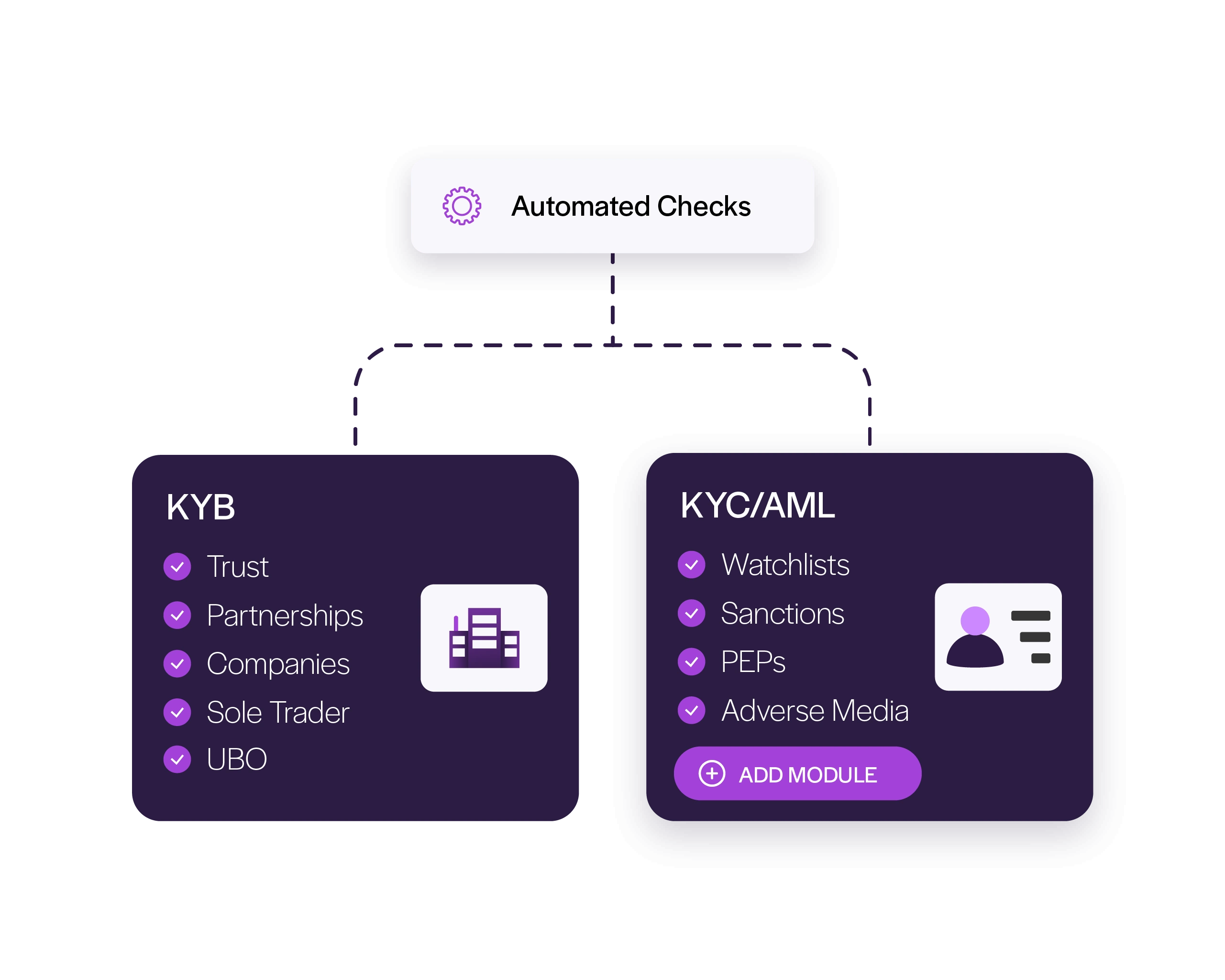
- End-to-end merchant onboarding connects KYB, KYC, AML screening, underwriting, approvals, and ongoing due diligence so teams can work from the same data and decision context.
- Onboarding workflows need to be configurable by jurisdiction, product, merchant type, and risk profile because compliance and due diligence requirements vary between markets.
- In one OnBoard deployment, a leading payment provider shortened time-to-live by 12 days and processed more than 15,000 applications with no human touch
2 Common Merchant Onboarding Challenges Impacting Growth and Costs
When merchants churn during the onboarding process, your customer acquisition cost (CAC) increases, your revenue decreases, and your sales team is less productive.
This means the return on investment (ROI) of reducing your onboarding attrition from 30% to 10%, 5% or even 0% is enormous.
But what are the root causes of merchant churn during onboarding? Two key factors play big parts:
1. Requesting Too Much Information Causes Merchant Frustration & Drop-Off
Payment providers need to collect extensive information about merchants, including their business structure, ownership, identity, products and risk profile.
But the onboarding experience itself can influence which provider a merchant chooses. Mastercard research found that 30%–35% of MSMEs surveyed in Asia-Pacific considered onboarding time and a simple onboarding process important when selecting an acquirer. The same research highlights the value of collecting only relevant information upfront rather than pushing every merchant through the same application journey.
The challenge is not collecting less due diligence information. It is collecting the right information from the right merchant at the right time. Common requirements can include:
- The merchant’s organizational structure.
- Risk-related information from card schemes.
- Details on corporate history, related individuals, and beneficial ownership requiring background checks.
- Identity verification for all key individuals involved, including proof of identity, driver’s license and proof of address.
- Payment product information to make the account operational.
For merchants, that can quickly become a long and unfamiliar process. If the journey is difficult to understand, asks for information that is not relevant to them, or creates repeated requests for evidence, friction increases and the provider risks losing the merchant to a simpler alternative.
2. Multiple Touchpoints Delay Approval & Cause Friction
The speed gap between traditional and highly automated merchant onboarding models can be significant. Mastercard research found that traditional acquirers took an average of 3 to 7 days to onboard a merchant, while payment facilitators (PayFacs) using more automated models could complete onboarding in 5 to 15 minutes.
Mastercard's research points to manual processes, disconnected systems and repeated back-and-forth as common sources of delay. Inside a payment provider, that friction is often compounded when different teams need to assess the same application from different perspectives:
- Compliance checks the application against regulatory requirements and internal policies.
- Sales and growth departments focus on keeping the opportunity moving and the merchant informed.
- Fraud looks for identity, document and behavioral risk signals.
- Risk and Underwriting assess financial exposure, the merchant's business model and approval criteria.
These teams have different responsibilities, but the process slows down when they work sequentially or from disconnected systems. The same merchant data may be reviewed more than once, additional questions can be raised at different stages, and one team may not have visibility into decisions already made by another.
For the merchant, that can mean repeated requests for information and long periods with little visibility into what is happening. For internal teams, it creates duplicate work, longer review queues and more manual handoffs before an application can be approved.
Faster onboarding does not require removing these specialist checks. It requires connecting them so verification, compliance, fraud and underwriting can work from shared data and, where appropriate, run in parallel rather than one after another.
The result is a better experience for the merchant and less friction between Sales, Compliance, Fraud and Risk, because each team can focus on the decisions that genuinely require its expertise.
Where merchant onboarding slows down
These two challenges usually show up as a handful of repeatable operational bottlenecks:
These are only some of the friction points that can slow merchant acquisition. Our Breaking Bottlenecks guide looks more broadly at how onboarding friction affects Sales, Compliance, conversion and revenue, and where automation can remove unnecessary work.
Why Most Tools Don’t Fix Merchant Onboarding Attrition
Most solutions only solve one part of the onboarding process. They excel in one area, but don't solve other friction points, such as risk and underwriting, fraud detection and prevention, or prospect and product management.
For example, your AML (Anti Money Laundering) and KYC process could be great for merchants, but terrible for your compliance team because it generates too many false positives. Or your onboarding solution might handle fraud well, but still create friction in the merchant onboarding experience.
So, you wind up creating a patchwork of individual vendors that solve each aspect of the onboarding process individually. But this approach siloes data, creates merchant and cross-department friction, and increases drop-offs.
The end result is a complex web of vendor relations that aren’t solving the root cause of your customer attrition, which is end-to-end friction between steps and onboarding departments. We’ve seen many companies change providers every few years because of this.
So, what should you look for instead?
Choosing the Right Merchant Onboarding Solution
Look for three key factors in an onboarding solution to address customer attrition and speed up the process compliantly:
1. A solution that is genuinely end-to-end.
An effective merchant onboarding platform should take care of all the touchpoints in the merchant journey, from product management and identity verification to risk and compliance, and including ongoing monitoring and validation. Using a single solution prevents relying on multiple, disconnected software that don't integrate smoothly—causing merchant frustration—or department-specific platforms that silo data and communication.
For a deeper look at how digital intake, KYB, KYC, AML, underwriting, activation, and ongoing due diligence work together, explore our complete guide to end-to-end merchant onboarding.
2. A platform that supports configurable, risk-based workflows.
Look for workflows that automate data capture, verification, risk scoring, and routing within defined rules. Straightforward, lower-risk applications can move automatically, while higher-risk, incomplete, or contradictory cases are routed to the right team for review.
The goal is not to remove human judgment. It is to use it where it adds value instead of forcing every application through the same manual process. This is the principle behind controlled AI in merchant onboarding, where automation operates within defined rules, thresholds, escalation paths and human oversight.
3. One solution, driving up conversion rates across sales, fraud, risk and compliance
Make sure your merchant onboarding solution works equally well for every department. Once you align your sales, compliance, risk and fraud department, you can reduce approval times and get your merchants live faster.
For a more detailed evaluation framework, use our onboarding platform evaluation checklist for acquirers and PSPs.
Merchant onboarding requirements by region
While the core challenges of merchant onboarding remain the same, regulatory requirements can differ significantly between markets. Payment providers operating across Australia, the United Kingdom, and the United States must navigate different compliance obligations, verification requirements, risk frameworks, and due diligence expectations.
Merchant Onboarding in Australia
Explore how Australian payment providers can streamline merchant onboarding while meeting AUSTRAC, AML/CTF, and customer due diligence requirements.
Merchant Onboarding in the United Kingdom
Discover how UK payment providers can improve onboarding efficiency while navigating FCA expectations, AML regulations, and evolving compliance requirements.
Merchant Onboarding Best Practices for UK Payment Providers
Explore practical strategies for reducing onboarding friction while maintaining compliance and delivering a better merchant experience.
Merchant Onboarding in the United States
Learn how US payment providers can accelerate merchant onboarding while addressing FinCEN requirements, OFAC screening, beneficial ownership verification, and BSA/AML obligations.
Merchant Onboarding Best Practices for US Payment Providers
Learn how leading US payment providers reduce onboarding delays, strengthen compliance controls, and improve merchant conversion rates.
A Better Merchant Onboarding Alternative: OnBoard
OnBoard is an end-to-end merchant onboarding and compliance platform that connects digital intake, KYB, KYC, AML, risk and underwriting, approvals, and ongoing due diligence in one configurable workflow.
Our clients range from enterprise-level to boutique payments and financial services firms that need a flexible, highly configurable platform that can scale with their onboarding operations. Global companies including Nayax, Fiserv, CloudPay and Xplor use OnBoard to support merchant onboarding across multiple markets.
Available in 120+ countries and 20+ languages, the platform supports localized onboarding journeys across different markets, merchant types and risk profiles.
This creates a connected merchant lifecycle from initial offer and application through verification, risk assessment, approval, activation and ongoing due diligence.
.webp)
Here’s how OnBoard helps you manage the entire process smoothly:
- Set up your products and services directly on the platform and offer one or multiple services and products in any language.
- Create, white label, and communicate offers directly from the platform in minutes. Choose quick offers via templates you pre-configure or customize your proposal, pre-filling fields with existing data to save merchants time.
- Manage your prospects through a customizable dashboard that provides end-to-end visibility with real-time progress tracking, historical communications, and incomplete actions. Send personalized emails or trigger automated reminders to nudge merchants to complete steps.
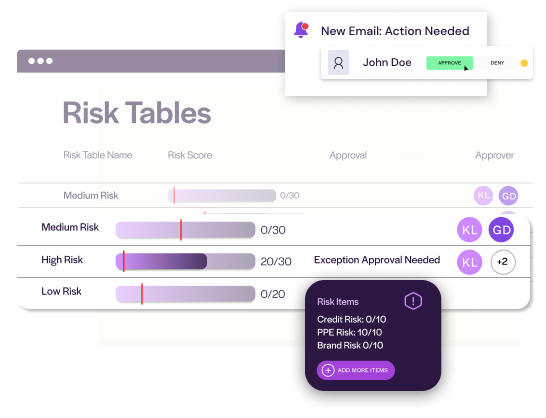
- Set configurable rules for credit and risk decisioning using weighted criteria, scoring and defined thresholds. Straight forward cases can progress automatically, while exceptions are routed to the appropriate team for review.
- Set precise rules for our AI-powered credit and risk engine that fully automates your checks. Prioritize criteria with customizable scoring or text flagging. Save time with reusable risk templates or personalize new engines per account.
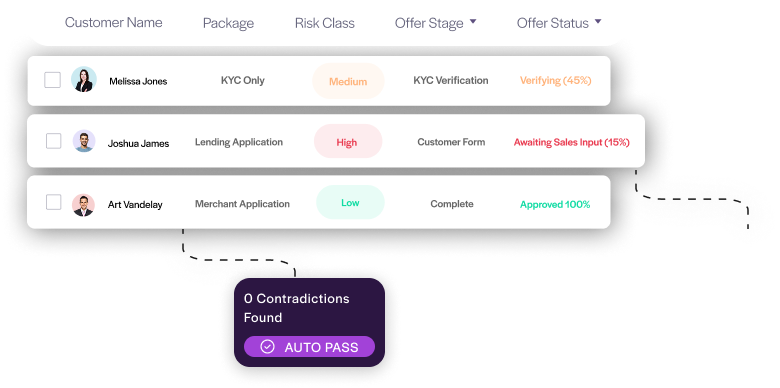
- Accelerate approvals with automated underwriting and focus only on exceptions by using ‘auto-pass’ for clean accounts. Automated notifications instantly alert the right stakeholders. Finalize quickly with integrated sign-offs.
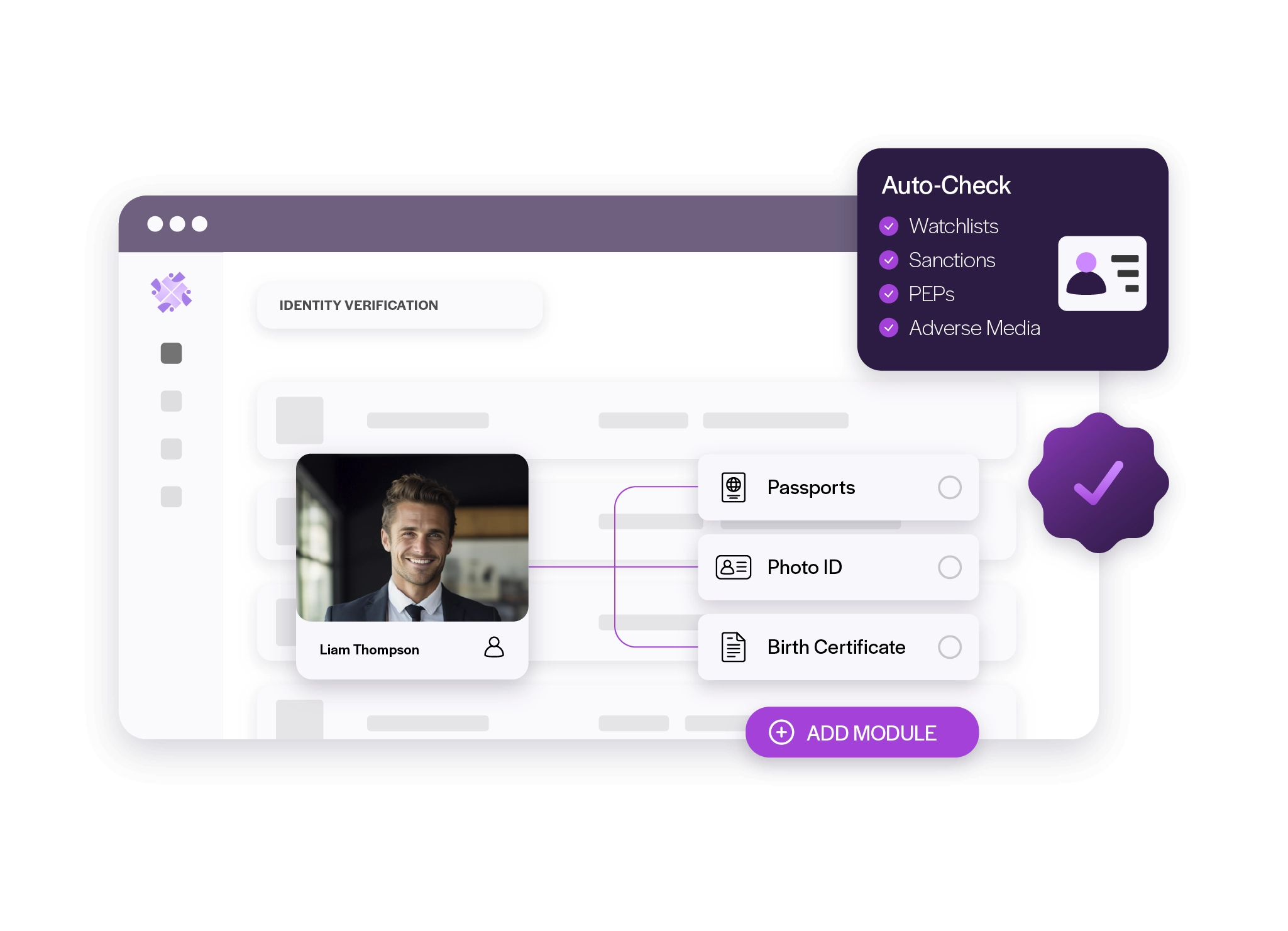
- Automate business and UBO verification in as little as 15 seconds, with a 95% pass rate, using connected company registry and compliance data sources.
- Run your data collection and storage on auto-pilot—our platform takes the screenshots and gathers necessary documentation for you.
- Send your client live automatically. We take care of all the data integrations during the fulfillment process.
OnBoard also supports the customer lifecycle after activation through ongoing customer due diligence (OCDD), friction point management and ongoing monitoring, helping teams keep customer information and risk decisions current over time.
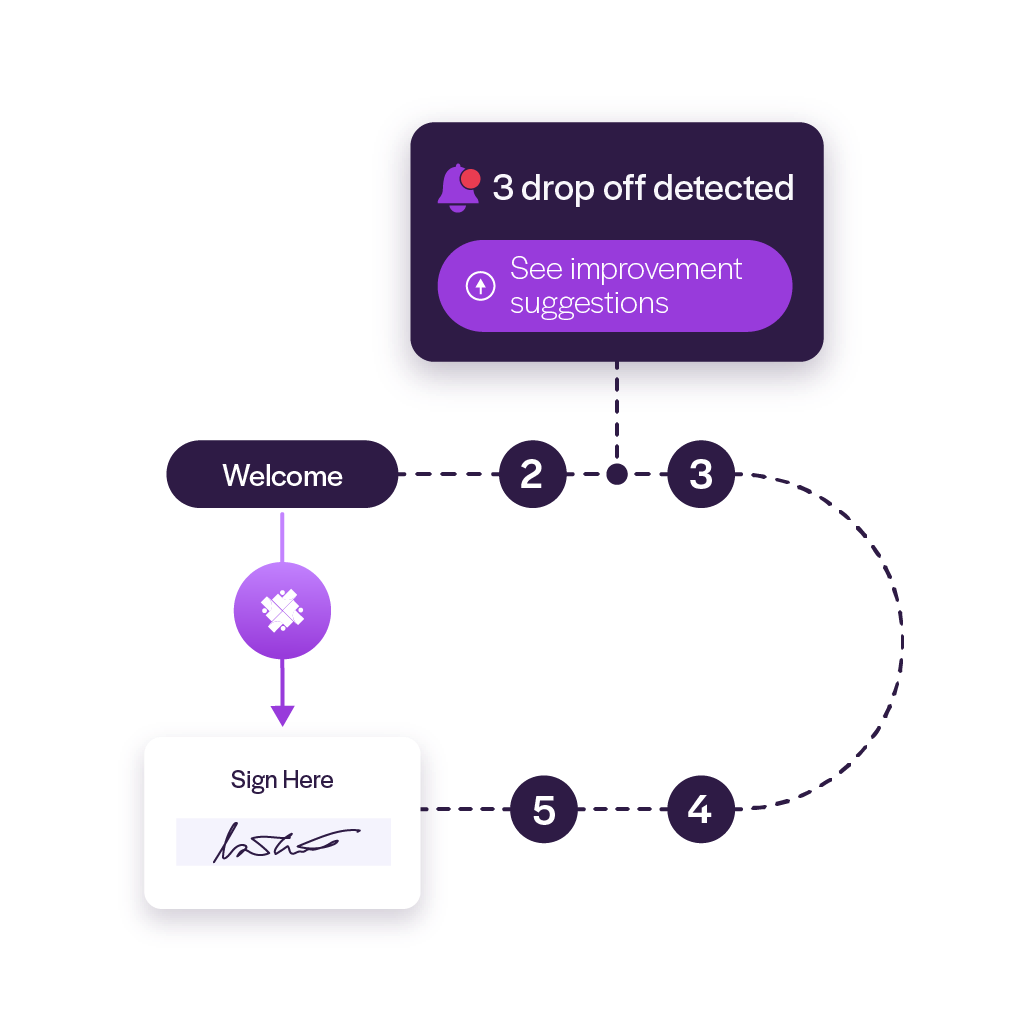
Why Choose OnBoard as Your Merchant Onboarding Solution
You only need one solution to onboard your merchants and this is what OnBoard does.
We designed a platform that is one of a kind in the regtech market, and displaces up to 23 disparate tools. By using OnBoard, whether you are a payment service provider (PSP), bank, acquirer or an independent sales organization (ISO), you can create productivity gains and cost reductions no matter your type of payment or financial institution.
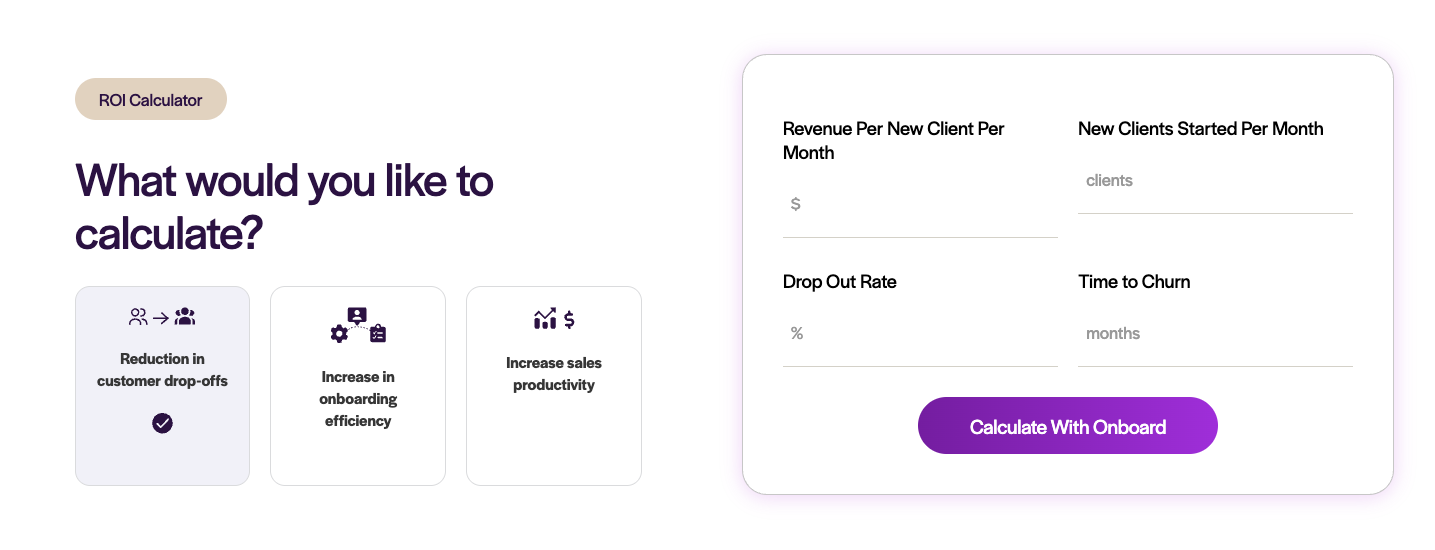
We’ve helped our payment customers go from 15% customer growth to 30%. Use our ROI calculator to see how much you can lower your attrition rate with Onboard.
Dynamic Smart Forms Reduce Avoidable Application Friction
Merchants do not only drop out because forms are long. Friction also builds when they are asked questions that do not apply, cannot see what evidence is required, or only discover errors after submission.

Smart Forms use real-time logic and validation to tailor the application journey to the merchant, helping collect the right information upfront and identify missing or inconsistent data earlier.
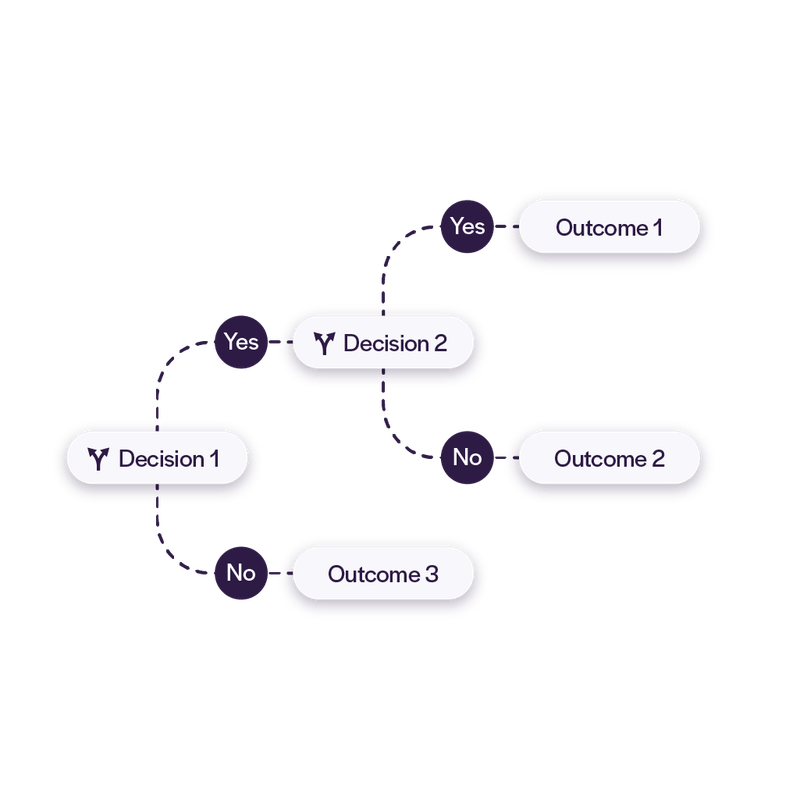
Within the application journey, Smart Forms reduce avoidable friction by:
- Auto-populating fields based on info provided, saving merchants time.
- Validating information in real time including flagging errors or asking for additional documentation upfront, so merchants can update data on the spot, helping keep the application moving.
- Dynamically showing or hiding fields based on previous answers, creating personalized form paths that reduce redundancies and make sense for the merchant.
- Cueing merchants on next steps (e.g., types of documentation required), managing expectations while reducing frustration.
- Allowing merchants to upload registration documents and use digital signatures during the application process, avoiding tedious and time-consuming manual effort.
- Connecting with CRM systems, and other business applications so data can move into downstream workflows without being manually re-entered.
- Using information already provided to calculate relevant values or trigger additional questions only when they are needed.
Smart Forms feed structured merchant data into downstream verification, risk and underwriting workflows. Configurable rules can then determine whether an application can continue automatically or needs further review.
By adapting the application journey to each merchant and validating information earlier, Smart Forms can reduce avoidable friction while giving downstream teams cleaner, more structured data to work with.
No-Touch Onboarding Reduces Manual Review and Speeds Activation
No-touch onboarding is not about removing oversight. It is about allowing straightforward applications to move through configured checks and approval rules automatically, while routing exceptions to the right team.
This reduces repetitive work across Sales, Compliance, Fraud, Risk and Operations while keeping teams connected to the same application data and progress.
Sales and revenue
Automate offer generation, application workflows and merchant communications while giving Sales real-time visibility into application progress. Automated reminders and status updates reduce administration and help keep applications moving.
Fraud and risk
Configurable risk and underwriting rules can assess applications against defined criteria and route straightforward cases automatically. Exceptions, elevated risk or contradictory information can be sent to the appropriate team for review.
Compliance
Digital KYB, KYC and AML workflows help teams collect, verify and retain the information needed for review, while maintaining a record of checks, decisions and actions throughout the onboarding process.
Proof in practice: A leading payment provider shortened merchant time-to-live by 12 days, processed more than 15,000 applications with no human touch, and reduced operational head count by six FTEs after transforming its onboarding process with OnBoard.
See the full case study: How Smarter Onboarding Unlocked Rapid Growth for a Leading Payments Provider.
Shared Visibility Keeps Sales, Compliance, Risk and Operations Aligned
Faster onboarding is difficult to sustain if Sales, Compliance, Risk and Operations are working from different systems or cannot see the same application status, data and decisions.
A shared workflow gives each team visibility into the same merchant journey while allowing work to be routed according to responsibility. Instead of every department reviewing every application, teams can focus on the decisions and exceptions that genuinely require their expertise.
For payment providers operating across multiple markets, workflows can also be configured by jurisdiction, merchant type, product and risk profile. OnBoard is available in 120+ countries and 20+ languages, giving global teams a consistent onboarding framework while allowing rules, checks and approval paths to be configured for different markets.
MVSI also has a multilingual team of KYB, KYC and AML experts across the US, EMEA and Asia-Pacific who can support program setup, program reviews and audit support.
Driving $50M in Revenue in 2 Years with OnBoard
OnBoard by MVSI can also support growth beyond direct merchant acquisition by helping payment providers manage onboarding across partner and reseller networks.
An international payments firm approached OnBoard by MVSI to support growth in its Australian market. Its strategy combined two things:
- building a reseller channel of ISOs and PayFacs
- using digital onboarding to bring new merchants live faster
In two years using OnBoard for partner management and merchant onboarding, the payments company:
- Grew their reseller channel to 120+ ISOs and PayFacs
- Signed up over 20,000 new merchants via their resellers
- Generated over $50 million in incremental new revenue
Following the success of the Australian program, the company began rolling out the same strategy with OnBoard in its Asian market.
Automate Your Merchant Onboarding Process with OnBoard
Faster merchant onboarding comes from removing unnecessary handoffs, not removing controls. A connected workflow can capture cleaner data, run checks earlier, automate straightforward decisions, and keep teams aligned from application through activation and ongoing due diligence.
OnBoard by MVSI brings digital onboarding, KYB, KYC, AML screening, underwriting, approval routing, and OCDD into one configurable platform for regulated payments and financial services.
Book a demo to see how your existing merchant onboarding process could be streamlined.
Disclaimer: This article is for general information only and does not constitute legal or regulatory advice. Requirements vary by jurisdiction, business model, and risk profile.
Frequently Asked Questions
Why do merchant onboarding requirements vary by region?
AML, customer due diligence, beneficial ownership, sanctions, and regulatory expectations vary by jurisdiction, so onboarding workflows need to be configurable for the markets in which a provider operates.
What should an end-to-end merchant onboarding platform include?
A complete platform should connect application intake, KYB, KYC, AML screening, risk and underwriting, approval workflows, integrations, audit records, and ongoing customer due diligence.
Can merchant onboarding be automated without weakening compliance?
Yes. Configurable rules can automate straightforward applications while higher-risk, incomplete, or contradictory cases are routed to Compliance, Risk, or Underwriting for review.

